FedEx’s Cost-Cutting Triumph: Service Sacrificed on the Altar of Profits?
FedEx Corporation’s relentless pursuit of operational efficiency through its vaunted DRIVE program represents a fundamental strategic miscalculation that prioritizes short-term margin gains over the long-term customer relationships and service excellence that built the company’s reputation. While the Memphis-based logistics giant celebrates achieving its $4 billion cost reduction target, the harsh reality is that this efficiency obsession is systematically eroding the very foundation of customer trust and service quality that differentiated FedEx in the marketplace.
The Numbers Tell a Damning Story
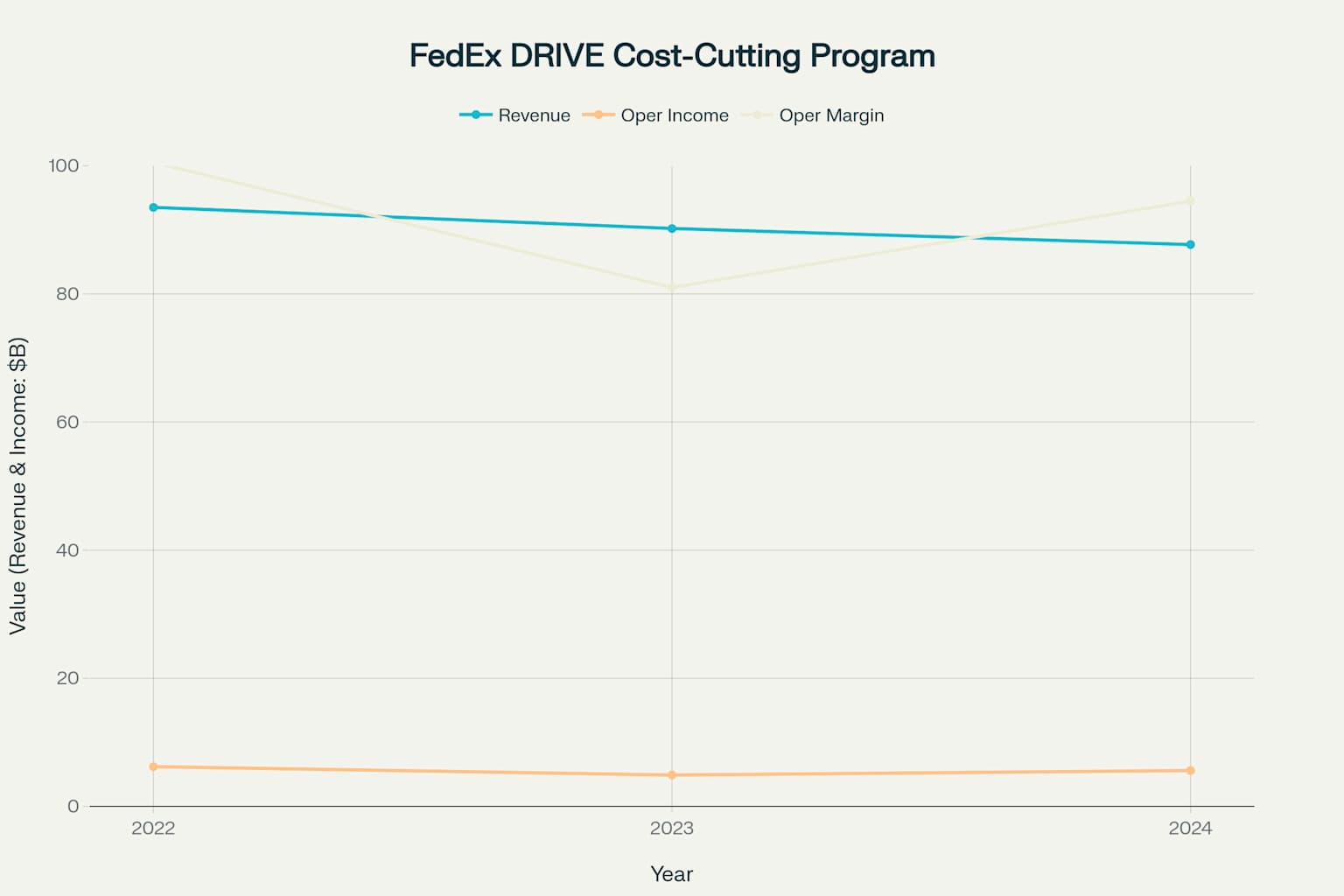
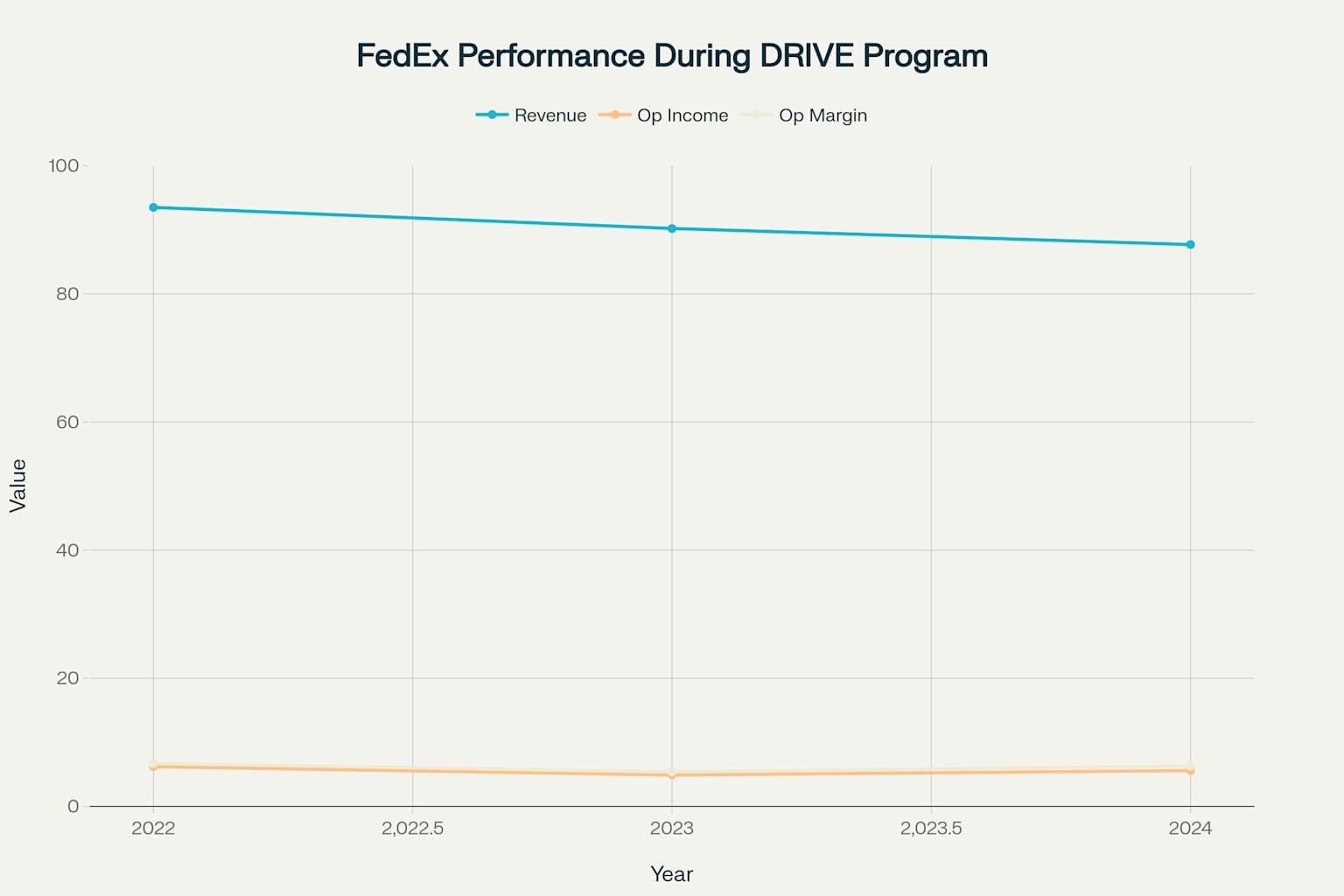
The financial evidence reveals a company cannibalizing its future for present-day profits. FedEx’s revenue declined from $93.5 billion in 2022 to $87.7 billion in 2024, representing a troubling 6.2% contraction despite massive cost-cutting efforts that should have positioned the company for growth. More alarming still, operating income plummeted 11% over this same period, falling from $6.2 billion to $5.6 billion, demonstrating that even aggressive cost reductions cannot compensate for fundamental revenue erosion.
The company’s stock performance tells an even more sobering tale. In 2023, the year FedEx aggressively promoted its DRIVE program achievements, shares plunged 29.9% as investors recognized the unsustainable nature of a strategy that prioritizes cost reduction over revenue growth. This market reaction reflects a growing understanding that FedEx’s approach represents a dangerous race to the bottom rather than sustainable competitive advantage.
Service Quality: The Casualty of Efficiency
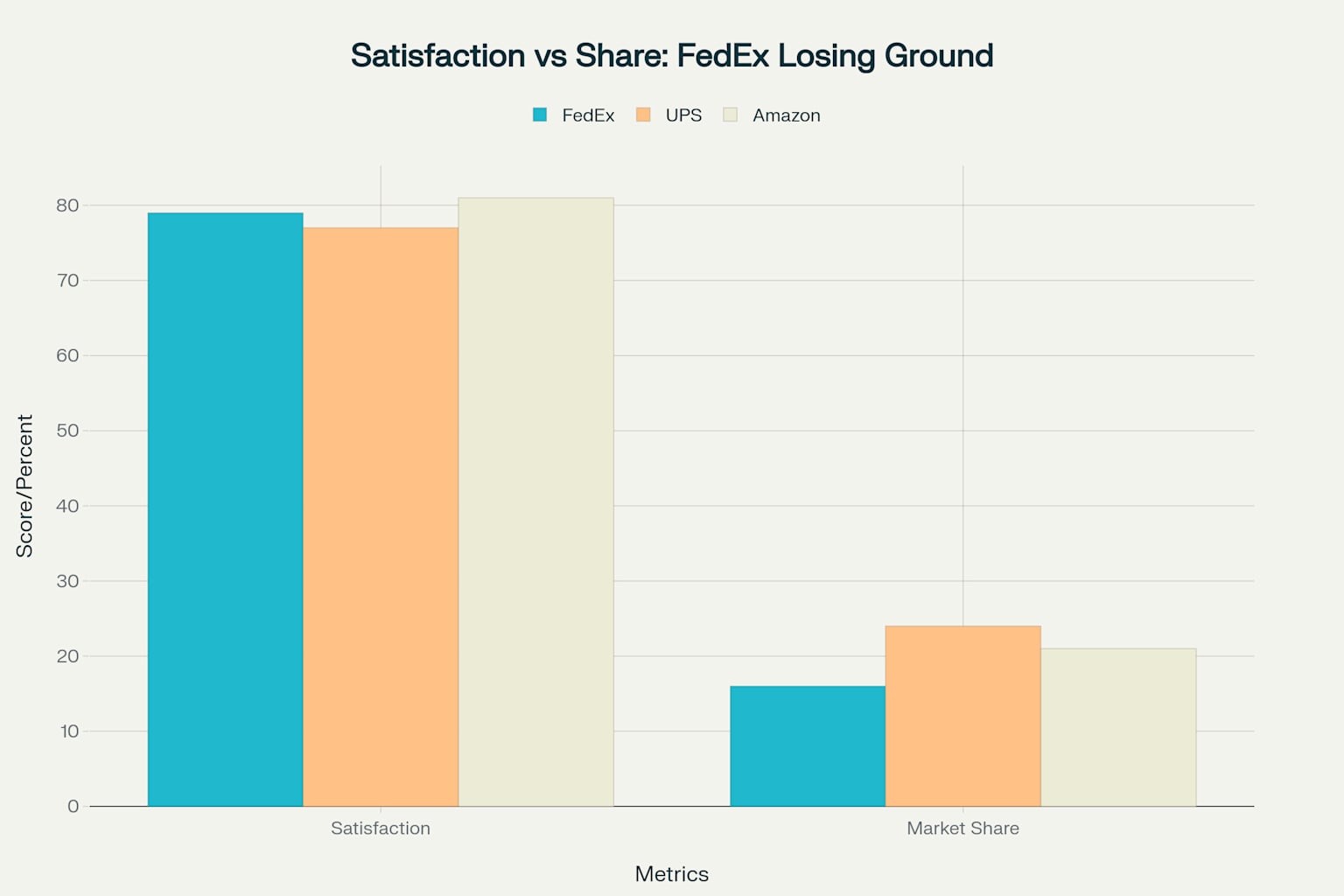
The human cost of FedEx’s efficiency drive manifests most clearly in its deteriorating service quality metrics and plummeting customer satisfaction. Customer complaints have reached epidemic proportions, with delivery failures, misrouted packages, and false delivery claims becoming routine experiences for FedEx users. The company’s customer satisfaction score of just 79 on the American Customer Satisfaction Index trails Amazon’s 81, while only 9% of customers would recommend FedEx services to others.
These aren’t isolated incidents but systematic failures resulting from the DRIVE program’s relentless focus on reducing operational costs. FedEx has eliminated Sunday deliveries for 15% of its customer base, reduced flight frequencies, closed facilities, and implemented staffing cuts that directly impact service reliability. The company’s on-time delivery rate of 89% during peak seasons significantly lags UPS’s performance in the high 90% range, creating a competitive disadvantage that no amount of cost-cutting can overcome.
The Competitive Landscape Shifts While FedEx Cuts
While FedEx obsesses over cost reduction, the logistics industry is experiencing unprecedented growth that the company is spectacularly failing to capture. The global logistics market is expanding at 7.2% annually, reaching $5.95 trillion by 2030, while e-commerce fulfillment services are growing at 13.5% annually. Yet FedEx’s revenue has declined at an average annual rate of 3.5%, representing a stunning failure to participate in industry growth.
Amazon’s strategic investments highlight FedEx’s misguided priorities. While FedEx cuts costs, Amazon is investing $4 billion to triple its delivery network by 2026, specifically targeting rural markets where FedEx struggles. Amazon’s market share has surged from zero in 2014 to 21% today, directly challenging FedEx’s 16% share through superior service and customer experience rather than cost-cutting.
The competitive dynamics have fundamentally shifted. Amazon now leads in customer satisfaction while rapidly gaining market share, demonstrating that service excellence, not operational efficiency alone, drives long-term success. FedEx’s dismissive attitude toward Amazon as a competitor appears increasingly disconnected from market reality as the e-commerce giant’s logistics capabilities continue advancing.
Acknowledging the Cost-Cutting Defense
Proponents of FedEx’s strategy argue that aggressive cost management is essential for surviving in an increasingly competitive and price-sensitive market. They contend that the DRIVE program’s $4 billion in savings positions FedEx for improved profitability and operational efficiency while maintaining service standards. The company’s executives consistently emphasize that cost reductions enable competitive pricing and market responsiveness in challenging economic conditions.
Furthermore, defenders note that FedEx’s operating margin improved from 5.4% in 2023 to 6.3% in 2024, suggesting that cost-cutting efforts are yielding positive results. They argue that temporary service disruptions are inevitable during major operational transformations and that long-term benefits will justify short-term customer inconvenience.
Why the Defense Crumbles Under Scrutiny
This defense fundamentally misunderstands the logistics industry’s value proposition and ignores mounting evidence of strategic failure. The $4 billion in cost savings pales compared to the $5.8 billion revenue decline over the same period, creating a net negative impact of $1.8 billion that undermines any efficiency gains. No amount of operational streamlining can compensate for systematic revenue erosion caused by customer defection and market share loss.
The margin improvement argument is equally hollow when examined closely. Operating margins increased primarily because revenue declined faster than absolute costs, not because of genuine efficiency improvements. This represents managed decline rather than sustainable growth, as evidenced by the 11% drop in absolute operating income despite margin expansion.
Most critically, the defense ignores the fundamental economics of the logistics industry, where customer relationships and service reliability create sustainable competitive advantages. Companies like Amazon and UPS understand that investing in service quality generates customer loyalty and pricing power that far exceed the benefits of cost reduction. FedEx’s approach represents a dangerous false economy that trades long-term customer value for short-term financial metrics.
The Death Spiral Beckons
Current trends point toward an accelerating decline if FedEx maintains its cost-cutting obsession. Customer satisfaction continues deteriorating while competitors invest in service improvements and network expansion. Industry growth of 7.2% annually means FedEx’s 3.5% annual revenue decline represents a devastating 10.7 percentage point underperformance that compounds over time.
The company’s additional $1 billion cost reduction target for fiscal 2026 suggests management remains committed to this failing strategy. However, continued cost-cutting will likely accelerate customer defection and service quality degradation, creating a self-reinforcing cycle of decline. If current trends persist, Amazon could capture 30% market share by 2026 while FedEx falls below 12%, transforming the company from a logistics leader into an industry afterthought.
Conclusion: Efficiency Without Excellence Equals Irrelevance
FedEx’s DRIVE program represents a textbook case of how operational myopia can destroy long-term competitive position despite achieving stated financial objectives. The company’s $4 billion cost reduction success story masks a far more troubling reality: systematic erosion of the customer trust, service excellence, and market position that defined FedEx’s brand for decades.
The logistics industry rewards companies that invest in customer experience and service reliability, not those that optimize for short-term cost metrics. Amazon’s rapid market share gains and superior customer satisfaction demonstrate the winning formula, while FedEx’s declining revenue and deteriorating service quality illustrate the losing approach.
Unless FedEx fundamentally recalibrates its strategic priorities from cost reduction to customer value creation, the company faces inevitable marginalization in a rapidly growing industry where it once led. The choice is stark: invest in service excellence and customer relationships, or continue down the cost-cutting path toward managed decline and ultimate irrelevance. The mounting evidence suggests FedEx’s efficiency triumph is actually a strategic catastrophe in disguise.
Editor’s Note: This is an opinion column and represents the views of the author. It does not necessarily reflect the views of this publication.