Autonomous Ride-Hailing: Ready for Mainstream or Still Half-Baked?
The expansion of Waymo’s robotaxi service to Atlanta through Uber’s platform, combined with Tesla’s nascent robotaxi launch in Austin, represents a watershed moment that conclusively answers a critical question about autonomous transportation: autonomous ride-hailing has crossed the threshold from experimental technology to commercially viable service, marking the beginning of mainstream adoption despite lingering public skepticism and regional limitations.
The Data Speaks: Commercial Viability Has Arrived
The numbers tell an unambiguous story about autonomous ride-hailing’s readiness for prime time. Waymo has accumulated over 71 million rider-only miles without a human driver, demonstrating unprecedented operational scale that dwarfs any experimental program. This massive real-world deployment has yielded extraordinary safety results that fundamentally challenge assumptions about autonomous vehicle readiness.
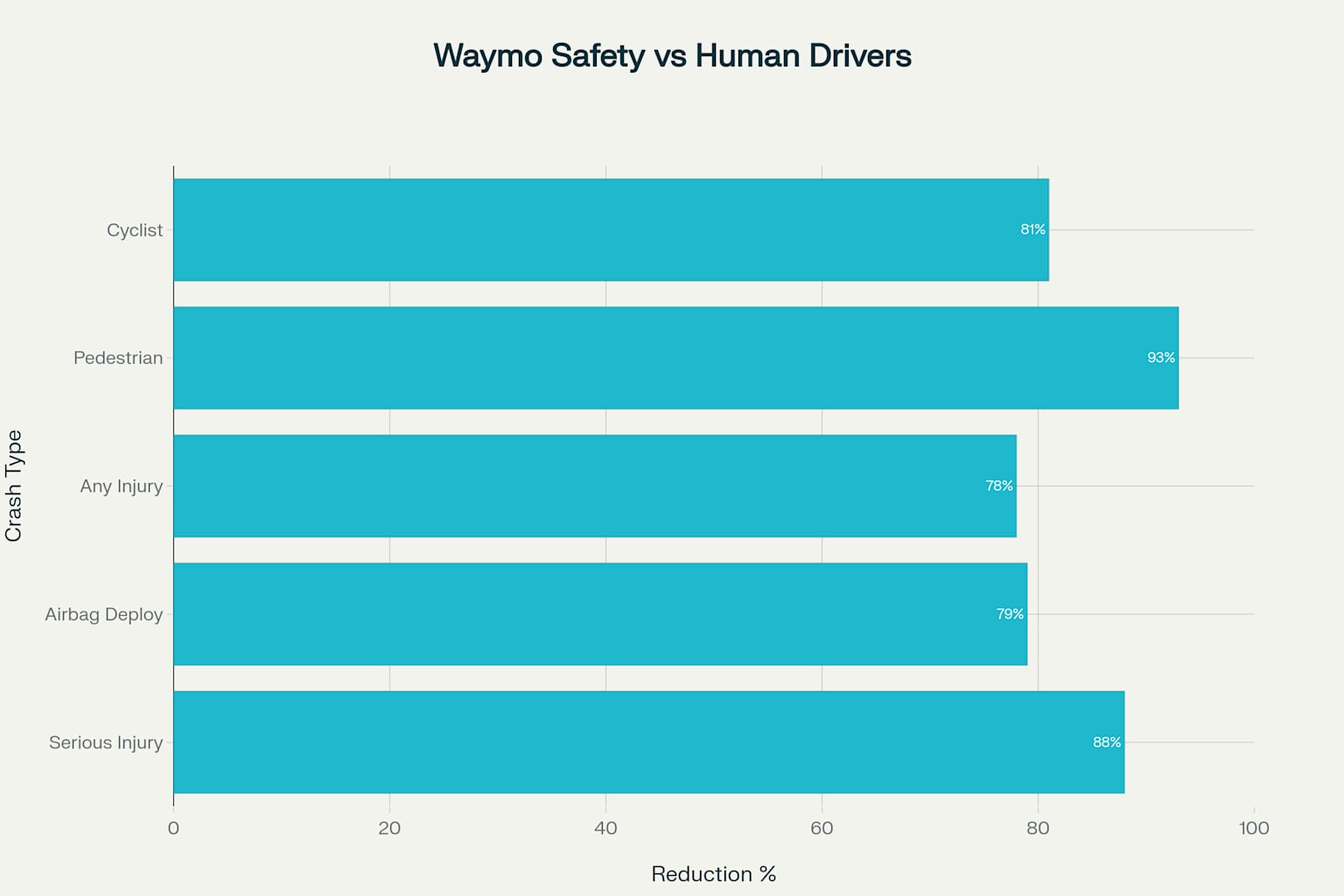
The safety performance data reveals that Waymo’s autonomous system achieves an 88% reduction in serious injury crashes, 79% fewer airbag deployment incidents, and a remarkable 93% reduction in pedestrian crashes involving injuries compared to human drivers. These aren’t marginal improvements—they represent transformational safety advances that exceed the performance thresholds typically required for regulatory approval of new transportation technologies.
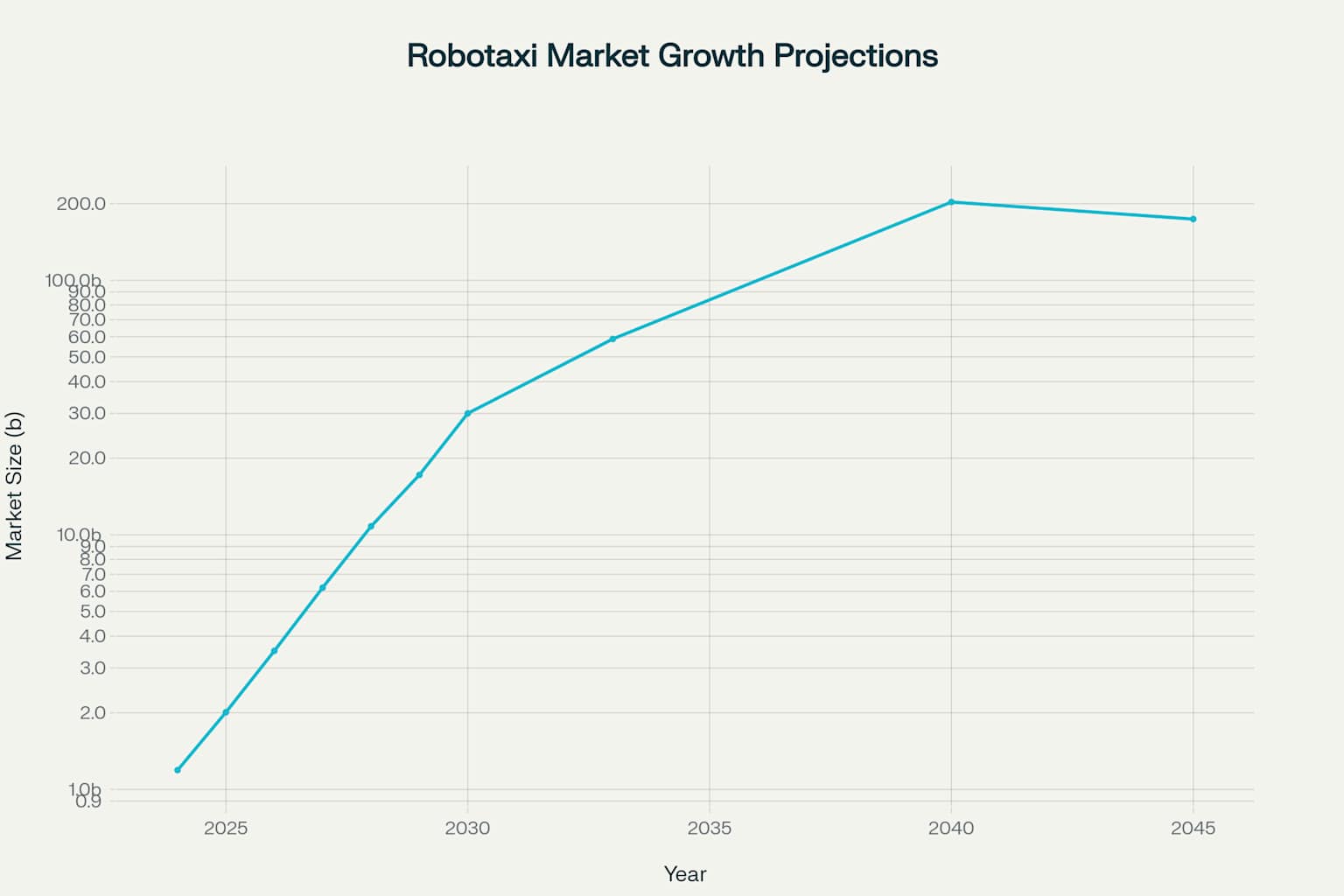
From an economic perspective, the autonomous ride-hailing sector is experiencing explosive growth that indicates genuine commercial traction rather than speculative investment. Market projections show the robotaxi industry expanding from $1.19 billion in 2024 to potentially $203 billion by 2040, representing a compound annual growth rate that signals robust commercial demand.
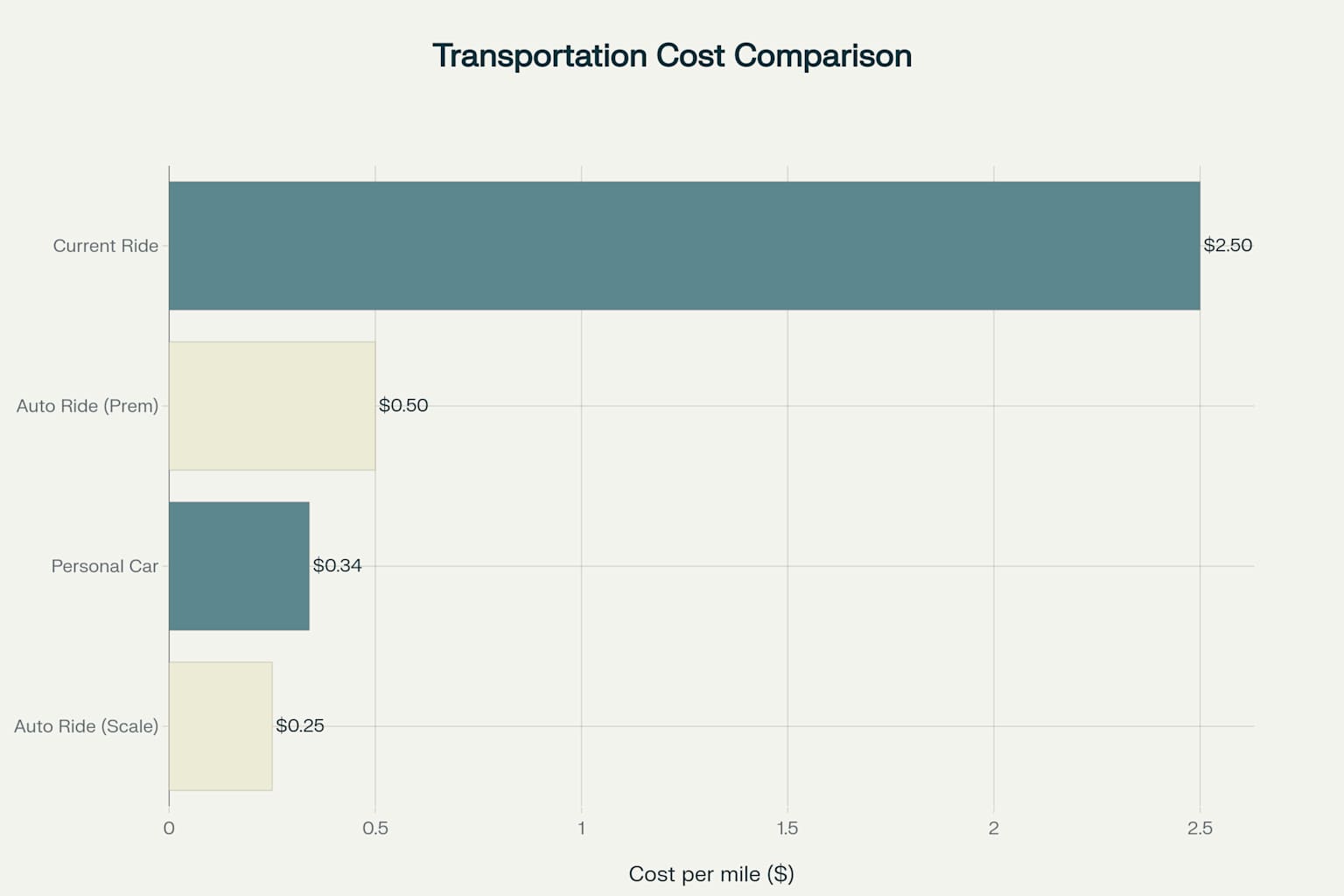
This growth trajectory aligns with cost economics that make autonomous ride-hailing commercially compelling. Research indicates that autonomous vehicles could operate at $0.25 to $0.50 per mile when scaled, compared to current ride-hailing costs of $2.50 per mile and personal vehicle marginal costs of $0.34 per mile. These dramatic cost reductions create a sustainable business model that doesn’t rely on subsidies or venture capital funding indefinitely.
Operational Reality Confirms Commercial Status
The distinction between pilot programs and commercial operations becomes clear when examining current deployment patterns. Waymo’s partnership with Uber in Atlanta builds upon established commercial operations in Phoenix, San Francisco, and Los Angeles, where the service has completed over 4 million paid autonomous trips in 2024 alone. This represents a dramatic scaling from 700,000 trips the previous year, indicating genuine market demand rather than curiosity-driven early adoption.
Tesla’s Austin robotaxi launch, while more limited in scope with just 10 vehicles operating in a geofenced area, represents the company’s transition from driver assistance technology to fully autonomous operations. Even with safety drivers initially present, this deployment marks Tesla’s evolution from Level 2 autonomy to commercial robotaxi operations, validating their camera-only approach to autonomous driving.
Chinese companies like Baidu Apollo further demonstrate commercial viability, with 62 million miles driven and plans to achieve profitability by 2025. Baidu’s sixth-generation robotaxi costs $27,670, representing a 60% cost reduction from previous generations, while projecting 80% service cost reductions through operational optimization.
Addressing the Skeptics: Why Public Perception Lags Reality
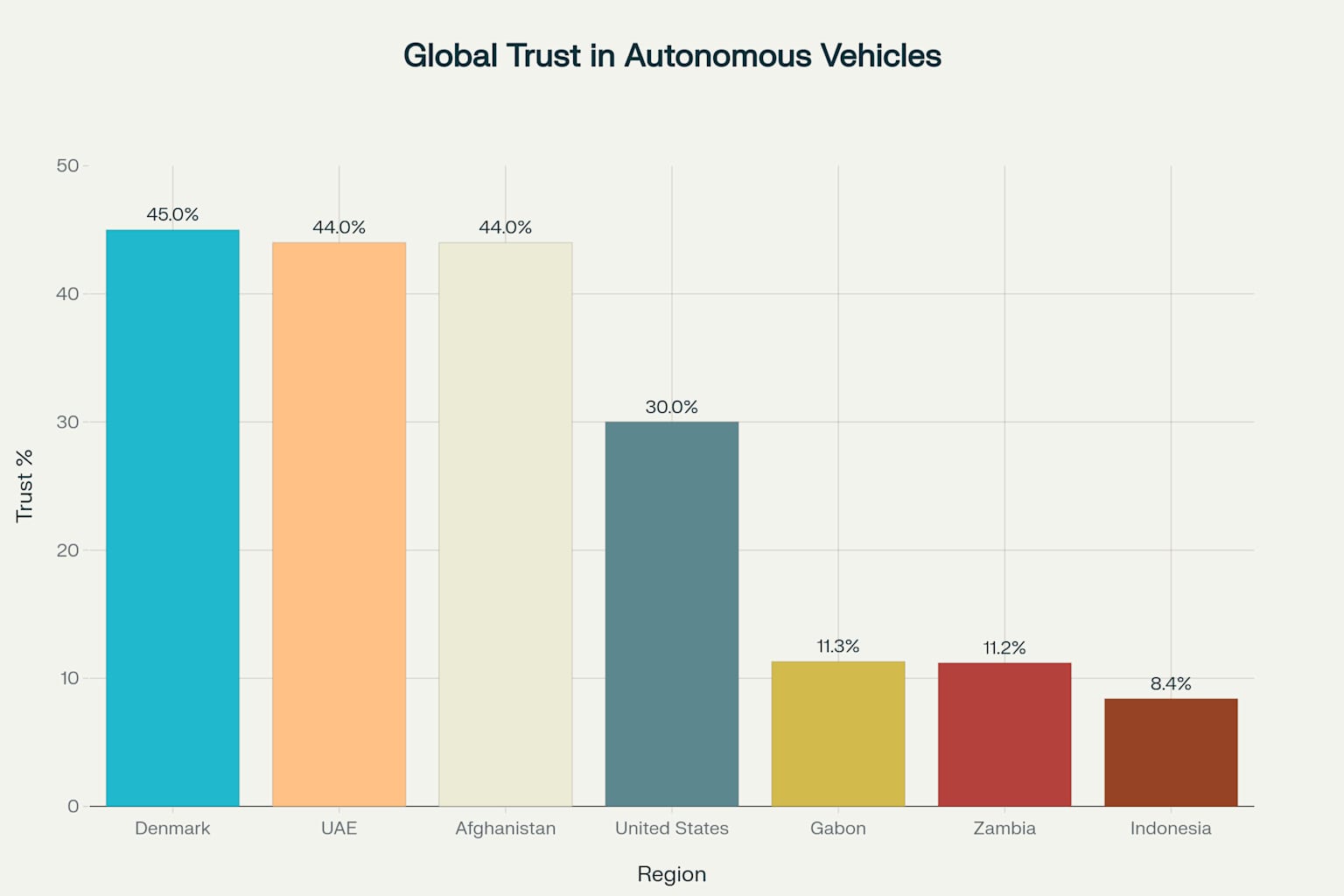
Critics rightfully point to persistent public skepticism about autonomous vehicles, with global surveys showing only 27% of people worldwide would feel safe in a self-driving car. Even in the most accepting countries like Denmark, trust reaches only 45%, while regions like Indonesia show acceptance rates as low as 8.4%.
However, this criticism fundamentally misunderstands the adoption pattern of transformational technologies. Consumer acceptance follows rather than precedes commercial viability—particularly for technologies where early users can experience benefits without ownership commitment. The ride-hailing model allows consumers to gradually build trust through controlled exposure rather than requiring immediate purchase decisions.
Furthermore, safety concerns driving public skepticism are increasingly contradicted by operational data. The Lloyd’s Register Foundation survey reflecting global distrust was conducted in 2021, before the massive accumulation of safety data now available. Recent peer-reviewed studies show Waymo’s technology reducing property damage claims by 88% and eliminating bodily injury claims compared to human drivers over 25 million miles.
The technical limitations argument also loses force when examining current operational capabilities. While Tesla’s Full Self-Driving remains at Level 2 autonomy requiring human oversight, Waymo has achieved Level 4 autonomy within defined operational domains. This isn’t a prototype—it’s a functioning commercial service that transported millions of passengers in 2024 without significant incidents.
Regulatory Environment Supports Commercial Expansion
Recent federal regulatory developments further confirm that autonomous ride-hailing has moved beyond experimental status. The National Highway Traffic Safety Administration’s updated framework in 2025 establishes clear protocols for crash reporting and data confidentiality that treat autonomous vehicles as legitimate commercial transportation options rather than experimental technologies. These regulations provide the regulatory certainty necessary for scaled commercial operations.
State-level approvals for expanded operations in major metropolitan areas demonstrate that regulators view current autonomous technology as sufficiently mature for public deployment. Waymo’s ability to secure operating permits across multiple major cities reflects regulatory confidence in the technology’s commercial readiness.
The Economic Imperative Drives Adoption
The compelling economic advantages of autonomous ride-hailing create market forces that will drive adoption regardless of initial public hesitation. ARK Invest projects that autonomous technology could reduce mobility costs to just 12% of current human-driven ride-hailing services, creating $14 trillion in enterprise value across global platforms. These aren’t speculative projections—they’re based on demonstrated operational efficiencies already visible in current deployments.
Insurance industry validation provides additional commercial confirmation. Swiss Re’s comprehensive analysis of Waymo’s operations over millions of miles demonstrates substantial reductions in both property damage and bodily injury claims compared to human drivers. This data enables favorable insurance pricing that improves the economic model for autonomous ride-hailing operators.
Conclusion: The Mainstream Transition Has Begun
The evidence overwhelmingly supports the conclusion that autonomous ride-hailing has achieved commercial viability and begun its mainstream transition. While geographic limitations and public skepticism persist, the fundamental question is no longer whether autonomous ride-hailing will succeed commercially, but how quickly it will scale across markets.
The Atlanta and Austin launches represent inflection points where experimental technology transforms into commercial service. Companies are deploying autonomous vehicles not to gather more test data, but to serve paying customers profitably. Market projections, safety performance, regulatory approval, and operational scale all confirm that autonomous ride-hailing has crossed the viability threshold.
Public acceptance will follow operational success, as it has with every transformational transportation technology from automobiles to commercial aviation. The data demonstrates that autonomous ride-hailing is not half-baked—it’s a fully cooked commercial reality that will reshape urban transportation over the next decade.
Editor’s Note: This is an opinion column and represents the views of the author. It does not necessarily reflect the views of this publication.