Amazon’s Rural Expansion: Same-Day Delivery Comes to 4,000 Cities
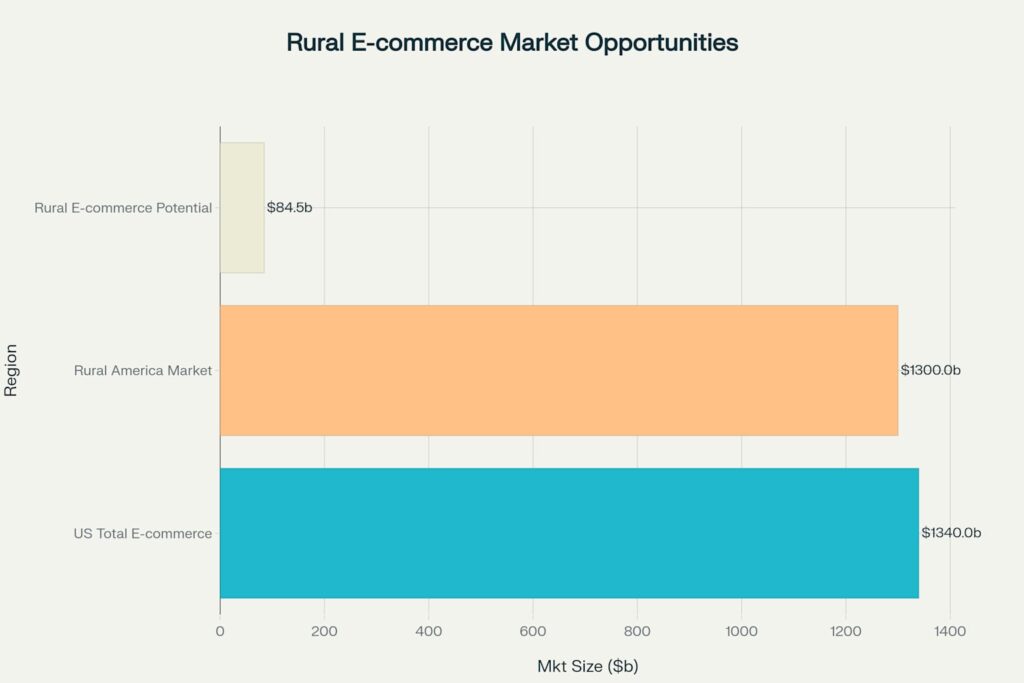
Amazon announced plans to expand same-day and next-day delivery services to over 4,000 smaller cities, towns, and rural communities across the United States by the end of 2025, representing the company’s most ambitious rural logistics initiative to date. This expansion, backed by a $4 billion investment through 2026, fundamentally challenges the traditional economics of rural delivery and positions Amazon to capture a significant share of the $1.3 trillion rural consumer market. The initiative addresses a critical gap in rural e-commerce infrastructure, where residents typically face limited delivery options, higher costs, and longer wait times compared to their urban counterparts.

The Economics of Rural Last-Mile Delivery
Cost Structure Disparities Drive Market Segmentation
The economics of rural delivery have historically created significant barriers for private carriers, resulting in substantial cost differentials that Amazon’s expansion directly addresses. Private carriers like UPS and FedEx charge delivery area surcharges for rural locations due to the inherent cost structure of serving low-density markets. UPS incurs delivery costs of $3.10 per package in rural areas compared to $1.40 in urban markets, while FedEx faces similar disparities with rural costs of $3.19 versus $1.52 for urban delivery.
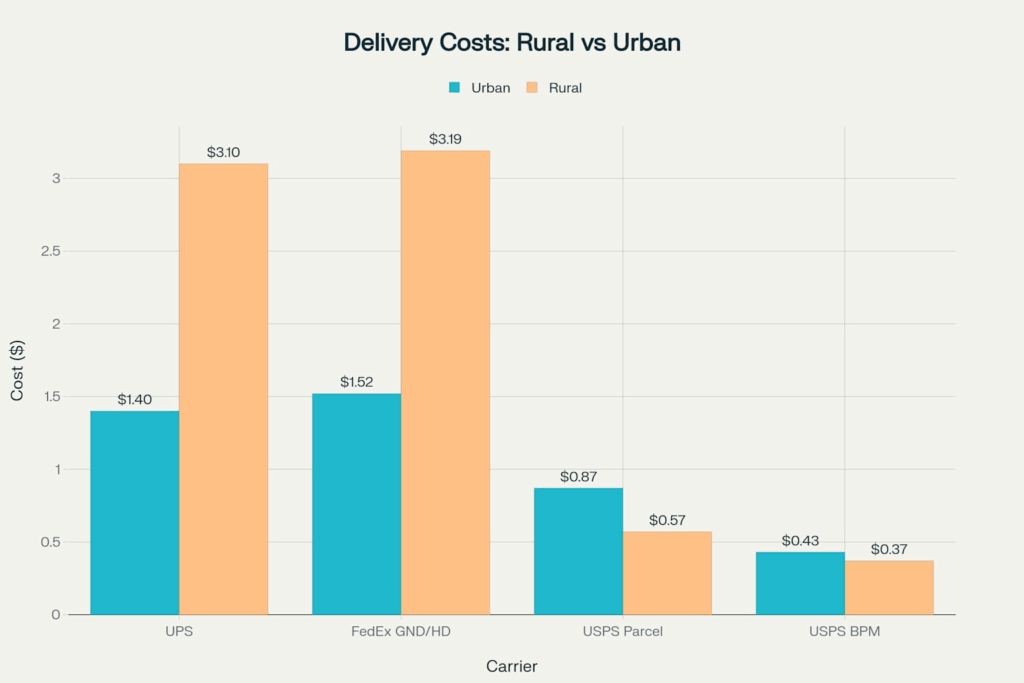
The United States Postal Service operates under a fundamentally different cost structure, with rural delivery costs of $0.57 per package for Parcel Post services, actually lower than the $0.87 urban cost. This counterintuitive pricing reflects the USPS’s fixed-cost network design, where increased volume spreads overhead across existing infrastructure, creating economies of scale that benefit rural delivery operations.
Population density serves as the primary driver of these cost differentials. Extended Delivery Area Surcharge ZIP codes, used as a proxy for rural areas, contain approximately 21 people per square mile compared to 461 people per square mile in non-surcharge areas. This low density requires delivery vehicles to cover greater distances between stops, reducing delivery efficiency and increasing per-package costs for traditional carriers.
Market Size and Penetration Opportunities
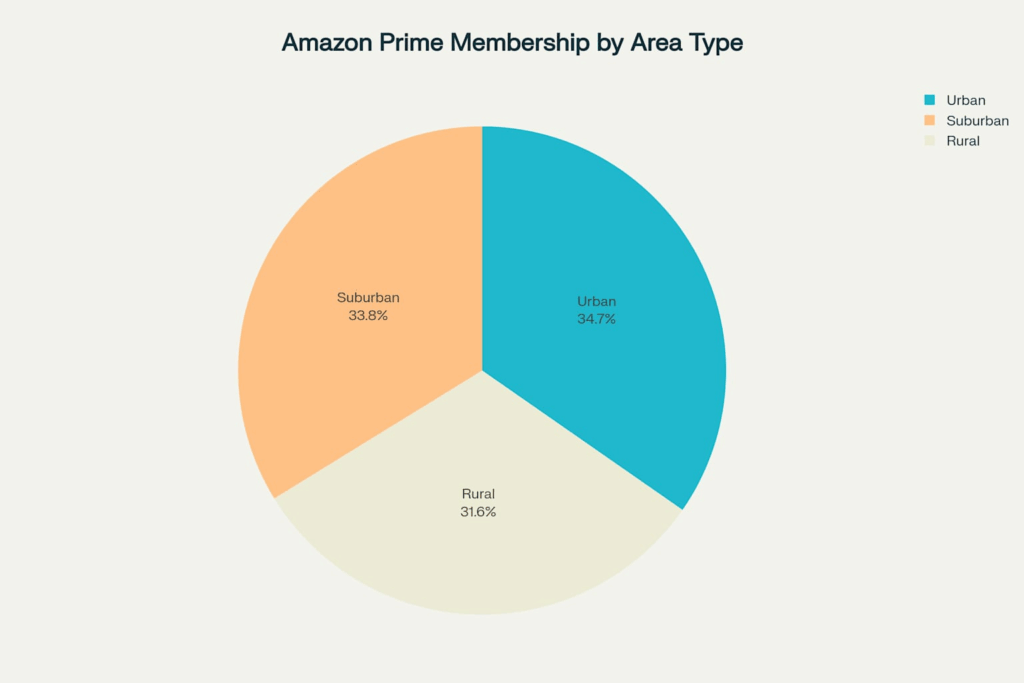
Rural America represents a substantial but underserved market opportunity for e-commerce expansion. The 16 percent of the U.S. population residing in rural areas contributes approximately 10.75 percent to continental U.S. GDP, despite facing limited retail access and higher delivery costs. Amazon Prime membership penetration reflects this service gap, with rural customers achieving 71 percent membership compared to 78 percent in urban areas and 76 percent in suburban markets.
The rural e-commerce market presents significant growth potential, with small businesses in rural areas positioned to add $84.5 billion in additional annual sales through better adoption of online tools and technology. This potential translates to $46.9 billion in value-added economic activity and could support over 360,000 jobs across rural communities.
Amazon’s Strategic Infrastructure Investment
Network Expansion and Facility Development
Amazon’s $4 billion rural expansion investment will triple the size of its rural delivery network by 2026, adding over 200 delivery stations to serve communities previously underserved by rapid delivery options. The company projects this infrastructure expansion will create over 100,000 new jobs, including full-time positions at delivery stations with wages averaging nearly triple the federal minimum wage.
The expansion leverages Amazon’s existing logistics capabilities while addressing rural-specific challenges through hybrid delivery stations that serve multiple functions. These facilities store inventory locally, prepare packages for final delivery, and position products closer to customers’ addresses, reducing transportation distances and delivery times. The approach represents a fundamental shift from centralized fulfillment to distributed micro-fulfillment designed for rural market characteristics.
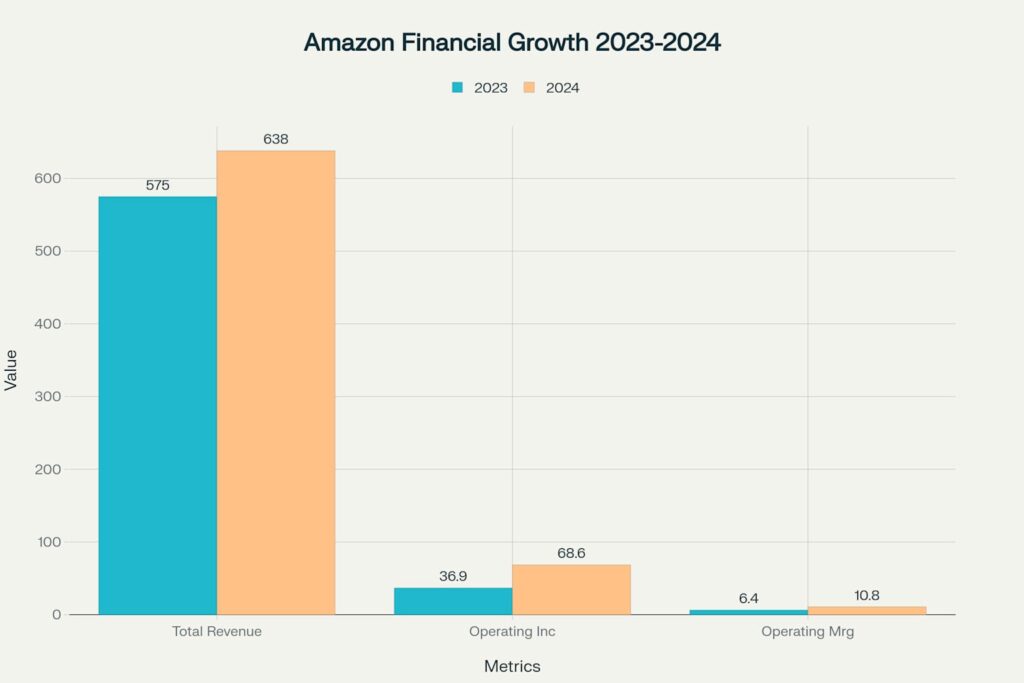
Amazon’s financial performance provides the foundation for this substantial infrastructure investment. The company’s total revenue increased 11 percent from $575 billion in 2023 to $638 billion in 2024, while operating income grew 86 percent from $36.9 billion to $68.6 billion. Operating margins expanded from 6.4 percent to 10.8 percent, demonstrating the operational efficiency gains that enable large-scale infrastructure investments in challenging markets.
Technology Integration and Automation
Technology Integration and Automation
Amazon’s rural expansion relies heavily on advanced technology integration to overcome the economic challenges of low-density delivery markets. The company’s delivery stations incorporate AI-powered package sorting technology, including the VASS (Vision Assisted Sort System) that uses computer vision to identify package destinations and guide workers through optimized sorting processes.
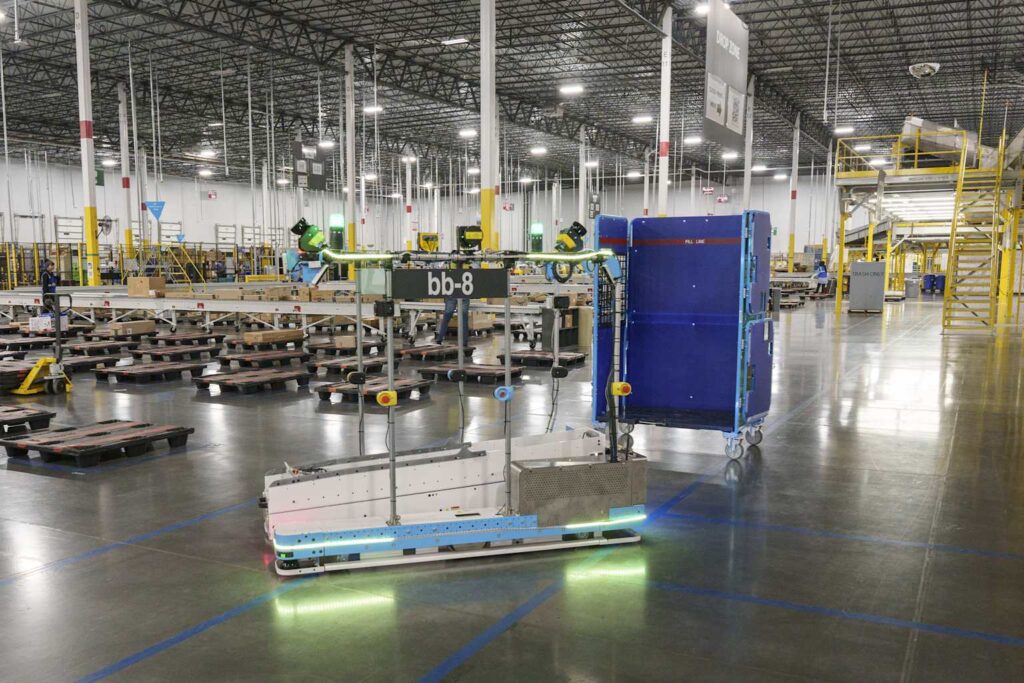
Machine learning algorithms predict local customer preferences and optimize inventory placement based on regional demand patterns. This technology enables Amazon to stock popular items like wireless headphones and coffee pods alongside regionally-specific products such as wild bird food in Dubuque, Iowa, and after-sun body butter in Sharptown, Maryland. The predictive capability reduces delivery times by positioning inventory closer to anticipated demand.
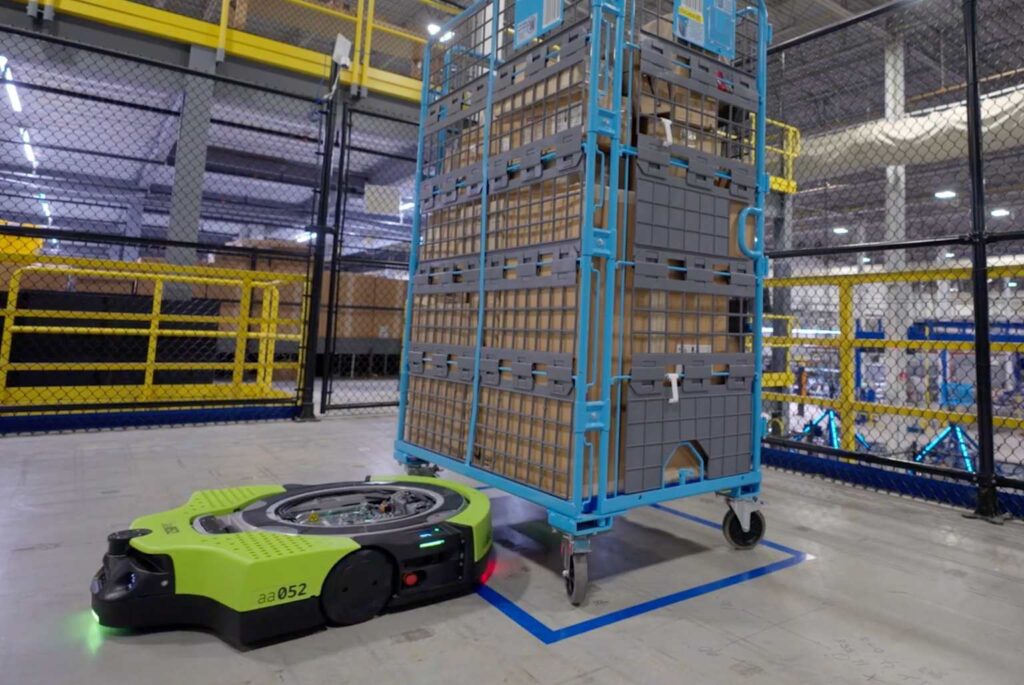
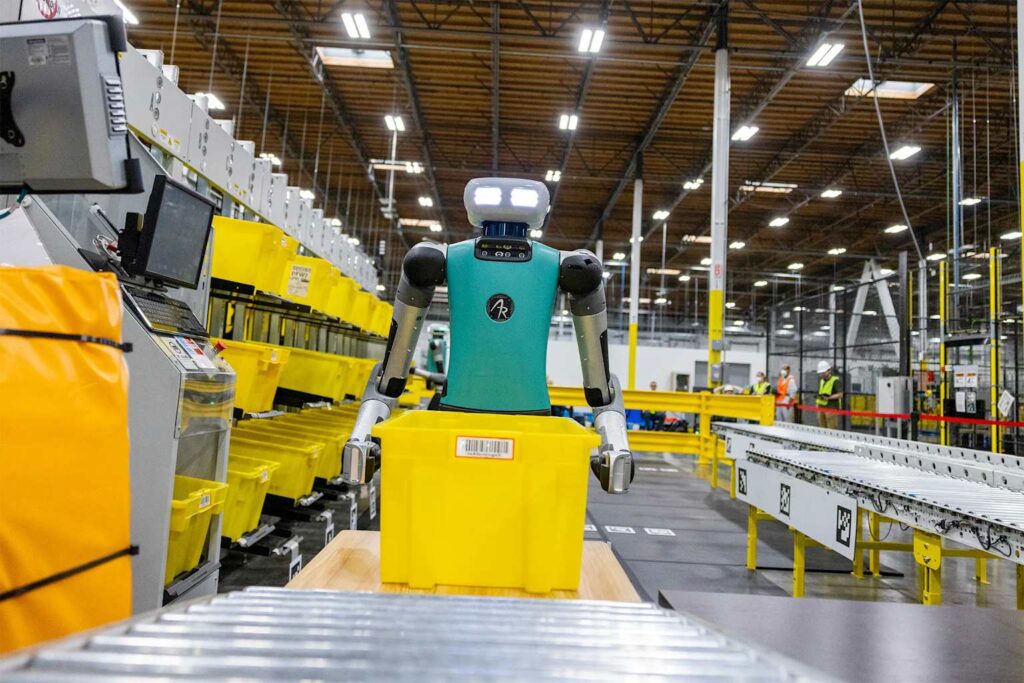
Advanced robotics systems within fulfillment centers support the rural expansion through improved efficiency and cost reduction. Amazon’s Lab126 device unit develops multi-tasking warehouse robots powered by agentic AI, capable of performing various tasks including unloading trailers and retrieving repair parts through natural language commands. These systems become particularly valuable during peak demand periods, reducing manual labor requirements and improving operational consistency.
Competitive Landscape and Market Positioning
Strategic Response to Walmart Competition
Amazon’s rural expansion represents a preemptive competitive move against Walmart’s growing e-commerce presence in rural markets. Walmart’s coverage of U.S. households with same-day delivery has grown 22 percent during the past two years, reaching 93 percent of U.S. residences, with particular strength in rural areas where the company maintains extensive physical retail presence.
The competition intensifies as Walmart leverages its store and club network for order fulfillment, providing inherent advantages in rural markets where physical retail options remain limited. Walmart’s ability to fulfill orders from local stores reduces delivery distances and costs, creating competitive pressure on Amazon’s centralized fulfillment model. Amazon’s rural delivery investment aims to establish market presence before Walmart can fully capitalize on its physical network advantages in underserved areas.
Amazon’s approach differs fundamentally from competitors through its comprehensive logistics network development rather than reliance on existing retail infrastructure. The company’s delivery cost structure, averaging 280 packages across 180 stops per van trip, provides operational efficiency advantages over traditional carriers like UPS and FedEx, even in rural markets.
Partnership Strategies and Workshare Programs
Amazon’s expansion benefits from established partnerships with the United States Postal Service for final-mile delivery in challenging rural markets. Major parcel consolidators including FedEx SmartPost and UPS Mail Innovations utilize USPS delivery networks for rural shipments, recognizing the cost advantages of the postal service’s extensive rural infrastructure.
FedEx SmartPost volume growth demonstrates the effectiveness of hybrid delivery models for rural markets. SmartPost volumes doubled within four years, with explosive growth during 2008-2009 following DHL’s exit from the domestic market. The service delivers parcels to over 12,000 Destination Delivery Units, leveraging the Postal Service’s rural network while maintaining FedEx’s brand presence and customer relationships.
This partnership model creates mutual benefits where private carriers access cost-effective rural delivery while USPS gains package volume that spreads fixed costs across its existing network. Amazon’s direct investment in rural infrastructure positions the company to reduce dependence on such partnerships while capturing greater value from rural delivery operations.
Economic Impact and Job Creation
Local Economic Development Effects
Amazon’s facility development generates substantial local economic impacts beyond direct employment creation. Research analyzing Amazon facility openings demonstrates significant positive effects on county-level economic outcomes, with employment-to-population ratios increasing 0.7-1.0 percentage points following facility openings. This translates to a job multiplier effect of approximately 1.9, meaning every 10 jobs Amazon creates directly results in nine additional jobs elsewhere in the county.

The economic impact extends to poverty reduction and income growth, with median household income increasing 1.8-2.2 percent and poverty rates declining 2.4-3.3 percent in counties where Amazon establishes operations. In Illescas, Spain, Amazon’s fulfillment centers contribute €84 million annually to the municipal economy, with €43 million directly impacting the local economy through employee salaries and municipal taxes.
Local supplier preferences amplify these economic benefits, with 86 percent of operating expenses at Amazon’s Augny facility allocated to French suppliers. This approach stimulates regional business development, with the transportation sector experiencing accelerated new business creation following facility openings.
Workforce Development and Skills Training
Amazon’s rural expansion emphasizes workforce development and skills training to support technology-intensive operations. In European delivery stations alone, over 20,000 employees acquired new skills related to automation technology and AI-powered innovations during 2024. The company’s investment in automation increases reliability, maintenance, and engineering roles by more than 50 percent, creating higher-skilled employment opportunities in rural markets.
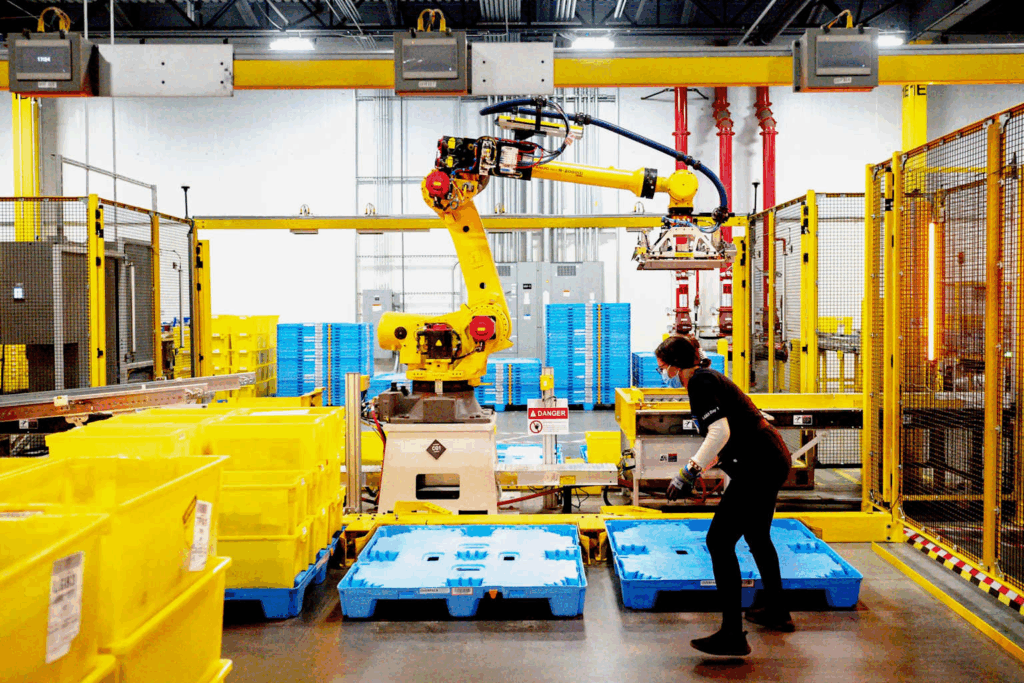
The transition from manual sorting and handling to technology-assisted operations requires comprehensive training programs. Workers previously performing manual package sorting receive training to operate automated systems, representing a shift toward higher-value activities within logistics operations. This workforce development approach aligns with Amazon’s technology deployment strategy, ensuring human workers complement rather than compete with automated systems.
Technology-Driven Logistics Revolution
AI and Machine Learning Applications
Amazon’s rural expansion leverages sophisticated AI and machine learning systems to optimize operations across multiple dimensions. Demand forecasting algorithms analyze historical sales data, weather patterns, search trends, and social media activity to predict customer needs with precision that enables pre-positioning inventory before orders are placed. Since implementing AI-driven forecasting in 2021, Amazon reduced excess inventory by 20 percent while improving product availability by 15 percent.
Generative AI creates detailed delivery maps for complex rural locations, providing drivers with precise building shapes, obstacle identification, and optimized drop-off points. This technology proves particularly valuable in rural areas where traditional GPS navigation often lacks detailed location information and where properties may be difficult to locate.
The company develops screen-embedded smart glasses for delivery drivers, enabling hands-free navigation and package identification. These devices integrate with route optimization algorithms that continuously adjust delivery sequences based on real-time traffic conditions, weather, and package priorities.
Operational Efficiency and Cost Reduction
Amazon’s technology investments target specific operational inefficiencies that become more pronounced in rural delivery scenarios. The company’s global cost-to-serve decreased on a per-unit basis for the second consecutive year while simultaneously increasing delivery speed, improving safety, and expanding product selection. CEO Andy Jassy indicates opportunities for continued cost reduction through inventory placement refinement, same-day delivery network growth, and accelerated robotics implementation.
The VAPR (Vision Assisted Package Recognition) system deployed in delivery vans automatically projects visual cues on packages requiring delivery at each stop, reducing driver physical and mental effort by 67 percent and saving over 30 minutes per route. This technology becomes particularly valuable in rural delivery scenarios where drivers may handle fewer packages per stop but cover greater distances between deliveries.
Package sorting automation reduces processing time and improves accuracy in delivery stations. European facilities utilizing advanced sorting technology demonstrate substantial improvements in efficiency, with workers managing buffers of up to 10 packages simultaneously compared to two packages using conventional methods. These efficiency gains prove essential for rural operations where volume per facility may be lower but service quality expectations remain consistent with urban markets.
Market Transformation and Future Implications
Rural E-commerce Evolution
Amazon’s rural expansion accelerates the transformation of rural retail markets by providing access to product selection and pricing previously unavailable in smaller communities. Rural customers benefit from Amazon’s everyday essentials program, which encompasses affordable groceries and household goods with same-day delivery availability. This capability addresses critical needs when customers require immediate delivery of essential items like paper towels, diapers, or pet food.

Source: brookings
The expansion creates opportunities for rural businesses to access broader markets through Amazon’s seller network and logistics infrastructure. Small businesses in rural areas gain access to fulfillment services that enable them to compete with larger retailers by offering rapid delivery without investing in logistics infrastructure. The U.S. Chamber of Commerce estimates rural small businesses could increase annual sales by $84.5 billion through better adoption of online tools and technology.
Local economic impacts extend beyond direct Amazon operations to broader digital economy development. Rural logistics infrastructure improvements facilitate increased online shopping adoption, reducing the need for residents to travel to urban areas for retail purchases. This shift supports local economic development by keeping spending within rural communities while providing access to expanded product selection.
Competitive Response and Industry Evolution
Amazon’s rural investment pressures competitors to reevaluate their rural market strategies and delivery economics. Walmart’s response includes expanding its own delivery network and leveraging store locations for fulfillment, while UPS and FedEx face decisions about pricing strategies for rural markets. The competitive dynamic forces industry-wide improvements in rural service levels and delivery economics.
The expansion demonstrates how technology and scale can overcome traditional barriers to rural service provision. Machine learning algorithms optimize routing, inventory placement, and demand prediction to achieve service levels previously impossible in low-density markets. This technological approach creates a template for other industries seeking to serve rural markets more effectively.
Conclusion
Amazon’s $4 billion rural expansion represents a fundamental shift in e-commerce logistics that redefines the economics of rural delivery and establishes new competitive benchmarks for service provision in underserved markets. The initiative demonstrates how strategic technology investment, infrastructure development, and operational innovation can overcome traditional barriers to rural market entry, creating economic opportunities for both the company and rural communities.
The expansion’s success metrics extend beyond Amazon’s financial performance to encompass broader economic development outcomes including job creation, local supplier development, and enhanced consumer access to goods and services. With rural America representing a $1.3 trillion consumer market and rural e-commerce potential reaching $84.5 billion over three years, Amazon’s investment positions the company to capture significant market share while driving technological advancement in logistics operations.
The competitive implications ripple throughout the logistics industry, forcing traditional carriers and e-commerce competitors to reassess their rural market strategies and service capabilities. Amazon’s technology-driven approach creates operational efficiencies that enable profitable service provision in markets previously considered economically challenging, establishing a new paradigm for rural logistics and e-commerce development.
This transformation extends beyond immediate business impacts to encompass long-term rural economic development, workforce advancement, and technological infrastructure improvement that will benefit rural communities for years beyond the initial investment period. Amazon’s rural expansion thus represents both a strategic business initiative and a catalyst for broader rural economic modernization, demonstrating the potential for technology and logistics innovation to address persistent geographic disparities in service access and economic opportunity.